April 30, 2004
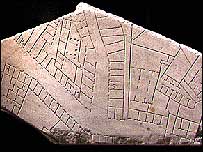
» Stanford's graphics department is helping to put together the remaining pieces of the Forma Urbis Romae, a giant stone map of ancient Rome
The Forma Urbis showed almost every feature of the city from the Coliseum and the Circus Maximus, where the chariot races took place, down to individual shops and even staircases.
But shortly after the fall of Rome, it is thought that the lower part of the map was torn from the wall, probably to be burned in kilns to make lime for cement.
It may have lain for centuries as just a heap of jumbled fragments, occasionally plundered for other building works.
During the Renaissance, some recognised its importance, but still the pieces continued to be dispersed.
"The map will never be fully recovered; no more than 15% of it survives and that is in 1,186 pieces," Professor Levoy told BBC News Online.