
April 30, 2004

» Russia's first museum of erotica is displaying Rasputin's enormous pickled penis

There is one exhibit in the museum which makes Knyazkin be especially proud of. This is the 30-centimeter preserved penis of Grigory Rasputin. "Having this exhibit, we can stop envying America, where Napoleon Bonaparte's penis is now kept. Napoleon's penis is but a small 'pod', it cannot stand comparison to our organ of 30 centimeters", the head of the museum said.
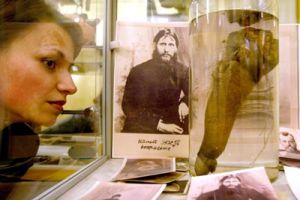
Rasputin's pickled willy

» Bionicles may save Lego — which has a twenty-year plan for their future development

It is not that Lego hasn't tried to move with the times. Toy store shelves feature dozens of new Lego products that bear little resemblance to the sets of bricks that were a childhood staple for 50 years. Today, there are familiar licences in kit form: Harry Potter, Bob the Builder and Winnie the Pooh. There have been successful home-grown innovations, too - Clikits for girls and programmable bricks called Mindstorms (as popular with adults as kids).

The biggest of the recent hits, and number one Lego product in 2003, is an action figure range called Bionicles, which first appeared in virtual form on the web in December 2000. Today, the epic struggle between Toa heroes and Makuta villains for control of Mata Nui, their tropical island world, features in comics and books, on the web, in CD-Roms and even movies, as well as in millions of snap-together kits sold in the shops. Bionicle may not have sold as fast as Beyblades or Yu-Gi-Oh, but they seem certain to outlast them. Three years old and still growing, Bionicle accounted for roughly a quarter of Lego's turnover last year. But the product's real value may prove to be in showing a company steeped in its own traditions the way out of troubled waters.

» Stanford's graphics department is helping to put together the remaining pieces of the Forma Urbis Romae, a giant stone map of ancient Rome

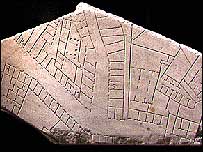
The Forma Urbis showed almost every feature of the city from the Coliseum and the Circus Maximus, where the chariot races took place, down to individual shops and even staircases.

But shortly after the fall of Rome, it is thought that the lower part of the map was torn from the wall, probably to be burned in kilns to make lime for cement.

It may have lain for centuries as just a heap of jumbled fragments, occasionally plundered for other building works.

During the Renaissance, some recognised its importance, but still the pieces continued to be dispersed.

"The map will never be fully recovered; no more than 15% of it survives and that is in 1,186 pieces," Professor Levoy told BBC News Online.

Fragment of Forma Urbis map

» Praying on your phone

"One of the most popular services on China Mobile, which is one of the large mobile phone providers in China, has been the lunar almanac," Dr Bell told the BBC programme, Go Digital.

"Each night you get sent a list of things that are auspicious to do on the next day. This is a traditional activity in Chinese homes.

"You would have had a calendar on the wall. Now the phone has become the platform for it," she said.

In her travels, she has come across people using mobile phones to show them the direction of Mecca or remind them of when it is time to pray.

"There have always been ways in which religious institutions have appropriated new technologies to use them to do interesting things," said Dr Bell, who is doing the research for chip maker Intel.

"What is fascinating to me is why that is something we don't feel we can talk about this. What is the social taboo about saying 'I go online and pray' or I am using faith-based dating services."

» The man who doesn't exist

Lee has no documentation to prove who he is. He doesn't have a birth certificate. He doesn't have a national insurance number. He has never had a passport, or a bank account. He has never been registered with a doctor, and he has never been on the electoral roll. There is nothing to prove he is who he says he is - 68-year-old Jim Lee from London.

For years, it didn't matter. It never crossed his mind that he could be a non-person. He had managed to get through much of his childhood and all of his adult years working outside the system, earning just enough to see himself right. But then he reached his late 60s and discovered people weren't giving him work any more, telling him that he was too old. He ran out of money, ran into trouble, and decided to visit a benefits office for the first time in his life. And that's when everything went wrong.

» Gin & tonic is under threat

One of just three native conifers, the hardy Juniperus communis is not choosy about what soil or location it grows in, and the trees can last hundreds of years. But, in a phenomenon which has left forestry experts baffled, the population is becoming increasingly geriatric and, in some spots, declining to near-extinction.