July 29, 2004
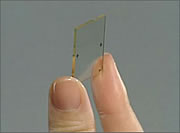
» Finally, someone's actually making transparent holographic data storage. Of course, we all know where this is going. Now, about that personal helicopter ... (via)

The Chupacabra is part of Mexican folklore. It supposedly kills other animals by sucking the blood out of them.
Other people have written in with their guesses about what the Maryland mystery animal could be. A Baltimore veterinarian said he thought it was a dog with mange and an official from the Department of Natural Resources believed it was a fox.
However, e-mails from Australia, South Africa and Alaska have labeled the animal as a razorback hog, a hyena, an aardwolf, a coyote, a capybara, a Mexican hairless dog, a warthog, a wolf, or an African wild dog. Some people say the animal is a previously thought extinct Tasmanian Wolf.
After the first shock of wild amazement had passed the two men, who were on horseback and armed with Winchester rifles, regained sufficient courage to pursue the monster and after an exciting chase of several miles succeeded in getting near enough to open fire with their rifles and wounding it. The creature then turned on the men, but owing to its exhausted condition they were able to keep out of its way and after a few well directed shots the monster partly rolled over and remained motionless. The men cautiously approached, their horses snorting with terror, and
found that the creature was dead. They then proceeded to make an examination and found that it measured about ninety-two feet in length and the greatest diameter was about fifty inches.
What do you hope to find out from that?
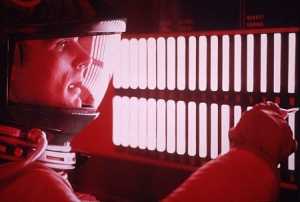
This is all part of NASA's artificial gravity programme, which is important because many of the problems with human space flight are associated with weightlessness and the effect on the brain, the muscles, the heart and so on, and the fact that the longer you are in the weightless environment the worse things get. Because Mars missions entail a journey of six months out and six months back, plus a stay on the surface for as much as a year and a half, you are talking about a thousand days where all of it is spent either in reduced-gravity or microgravity environments.
So what can we do to counter that?
Give the astronauts drugs, get them to do exercise. But none of these is uniformly effective as far as I can tell. The new thinking is we take our light, our heat, our fuel, our atmosphere - so why don't we take gravity as well? And then the question is how do you take gravity with you? There is the thought that you could use short-arm centrifuges, small enough to stay inside a relatively small vehicle at a radius of round about 3 metres, and spin people at around 40 revolutions per minute. Also you could give them a short but intense burst of gravity a couple of times - use gravity almost as a drug. If you can accept that concept, then you need to know if it would work and what the dose should be. And that's where the research programmes in Johnson Space Center are starting from. Later on this year if I'm really unlucky, I'll get to go on one of those centrifuges.