
April 28, 2004

» Why do women have orgasms? To find a sensitive man, rebel against the patriarchy or by biological accident?

The first, classical theory, advanced by Desmond Morris, is that the female orgasm has evolved to enhance the monogamous pair bond and make family life more rewarding. This is because only a long-term, stable male partner will know how to make a particular woman climax properly.

[...]

The second theory, advanced by many feminists, also holds that the female orgasm is an evolutionary adaptation, but that it is triggered by nothing more elaborate than straight intercourse; if it is not, there is either something abnormal about the woman - or inadequate about the man. The female's ability to multi-orgasm without the subdued "refractory" period the male goes through after ejaculation is additionally, to this school of thought, evidence of an almost insatiable sexual desire in women. For these theorists, monogamy is an unnatural instrument of political repression.

The third view of the female orgasm, proposed by the postmodern voice of Symons and heartily backed by Gould, is that a whole nexus of anatomical, social, cultural and emotional factors make female orgasm the subtle phenomenon it is. They propose that female orgasm is the happy coincidence of an existing, but minor, bodily quirk resulting from the physiological similarity of the sexes in the womb - an echo, in other words, of the male orgasm - and a cultural artifice no more adaptive than a learned ability such as writing.
» A heads-up display for your retina

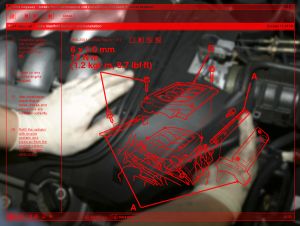
The monocle is worn in front of the eye and reflects scanned laser light to the eye allowing mechanics to view car diagnostics and instructions superimposed on their field of vision.

"Service technicians use it so that they can work on an engine and their view is superimposed on what they are seeing," Mr Goldstein told the BBC programme, Go Digital.

"They don't have to get up from what they are doing and go to a separate computer terminal or flick through a manual. They have it right where they need it."

A schematic overlying the real world

» Molecular gastronomy in the comfort of your own home

And then the fun began. The dehydrator arrived, and we made thin, crispy wafers of whatever we found in the larder: dill pickles, turnips, beets, kimchi. We created a palette of seasonings — not only Mr. Dufresne's red pepper powder, but green pepper powder and red onion powder (a pretty lavender color) that we found turned scrambled eggs into a respectable lunch or dinner. We made a lemon and a lime powder from pulverized, dehydrated zest that gave a refined citrus perfume to everything it touched: tomato soup, vanilla ice cream, iced tea. And we concocted a new-wave snack of seasoned puffed rice by dehydrating and then frying in olive oil overcooked arborio rice (a technique Mr. Andrés had described), and sprinkling the crispy rice with red pepper and onion powders.

We called up Mr. Achatz, who offered a couple of more dehydrator ideas: chips made from thinly sliced cured meats and a mango and mandarin orange fruit leather he makes in the dehydrator's liquid tray. Fruit leather got us thinking: why not vegetable leather? We puréed roasted peppers and poured them directly into the liquid tray, and in a couple of hours, we had turned out grown-up roll-ups to add to our crudités plate. The chorizo chips we made gave shape to the paella course. First, we imagined a paella napoleon, using the chips as "pastry," but that seemed a little pedestrian and too meaty, so we imagined the shrimp and saffron being a savory ice cream, the rice as puffed rice sprinkles adhering to the ice cream. Paella ice-cream sandwich!

» When a bean-bag gun just won't do: CHiPs wants a Spiderman net gun to stop suicidal bridge-jumpers

The state highway patrol, hoping to avoid another epic traffic jam caused by a suicide jumper on a major bridge, wants inventors to design and build a gun that can capture would-be jumpers in a spider-like web.

"At this point we're about ready to put out a request for a proposal," said California Highway Patrol spokesman Tom Marshall. "And we'll just see if there's some technology that might be usable."

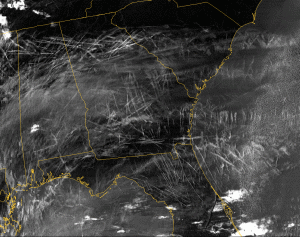
» Aircraft contrails may have warmed the US by up to half a degree per decade since the 1950s. Looking at this image, you can well believe it

According to Patrick Minnis, a senior research scientist at NASA's Langley Research Center in Hampton, Va., there has been a one percent per decade increase in cirrus cloud cover over the United States, likely due to air traffic. Cirrus clouds exert a warming influence on the surface by allowing most of the Sun's rays to pass through but then trapping some of the resulting heat emitted by the surface and lower atmosphere. Using a general circulation model, Minnis estimates that cirrus clouds from contrails increased the temperatures of the lower atmosphere by anywhere from 0.36 to 0.54°F per decade.

thick aircraft contrails over the southeastern US