» Where can you enjoy eternal sunshine? Not on Mercury, but at a mountain on the Moon. (And at the cinema, apparently)
» Troubled? Find your answers on the philosopher's couch
[Marinoff's] message, spoken in a defensive staccato, goes like this: Americans are tired of psychologists dwelling on our every painful feeling, we're sick of psychiatrists prescribing a new drug every time we feel confused and many of our most pressing problems aren't even emotional or chemical to begin with -- they're philosophical. To wit: You don't have to be clinically depressed or burdened by childhood guilt to want help with the timeless questions of the human condition -- the persistence of suffering and the inevitability of death, the need for a reliable ethics. ''Even sane, functional people need principles to live by,'' Marinoff told me, his voice lowering without slowing in the sun-flooded courtroom, ''so we are offering what Socrates called the examined life, the chance to sit with a philosopher and ask what you really believe and make sure it's working for you.''
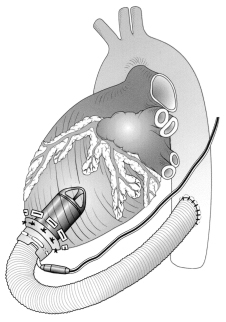
» An artificial heart ... powered by a cord in the head. More information about the procedure and the amazing story of another receipient
The operation on Mr Braid was certainly a challenging one. First the artificial Jarvik heart had to be sewn into the top of his own, failing organ.
Then a power cable had to be fed up through Mr Braid's chest and into his head, where it was to be attached to a pedestal screwed onto his skull and connected to an external power supply.
Peter Houghton was out shopping in Birmingham's busy city centre when he felt the tug at his head. A would-be mugger had snatched the small camera bag he carries everywhere, which powers the unique pump in his heart through a battery plugged into his skull. The teenage thief, unused to a security device actually wired into his victim's body, dropped the bag and fled as the electrical plugfell out of the bald patch to the back of Houghton's head. A deafening emergency alarm filled the air while January sales shoppers hurried past. Houghton fumbled to get the plug back in as fast as possible. It was, after all, keeping him alive.